
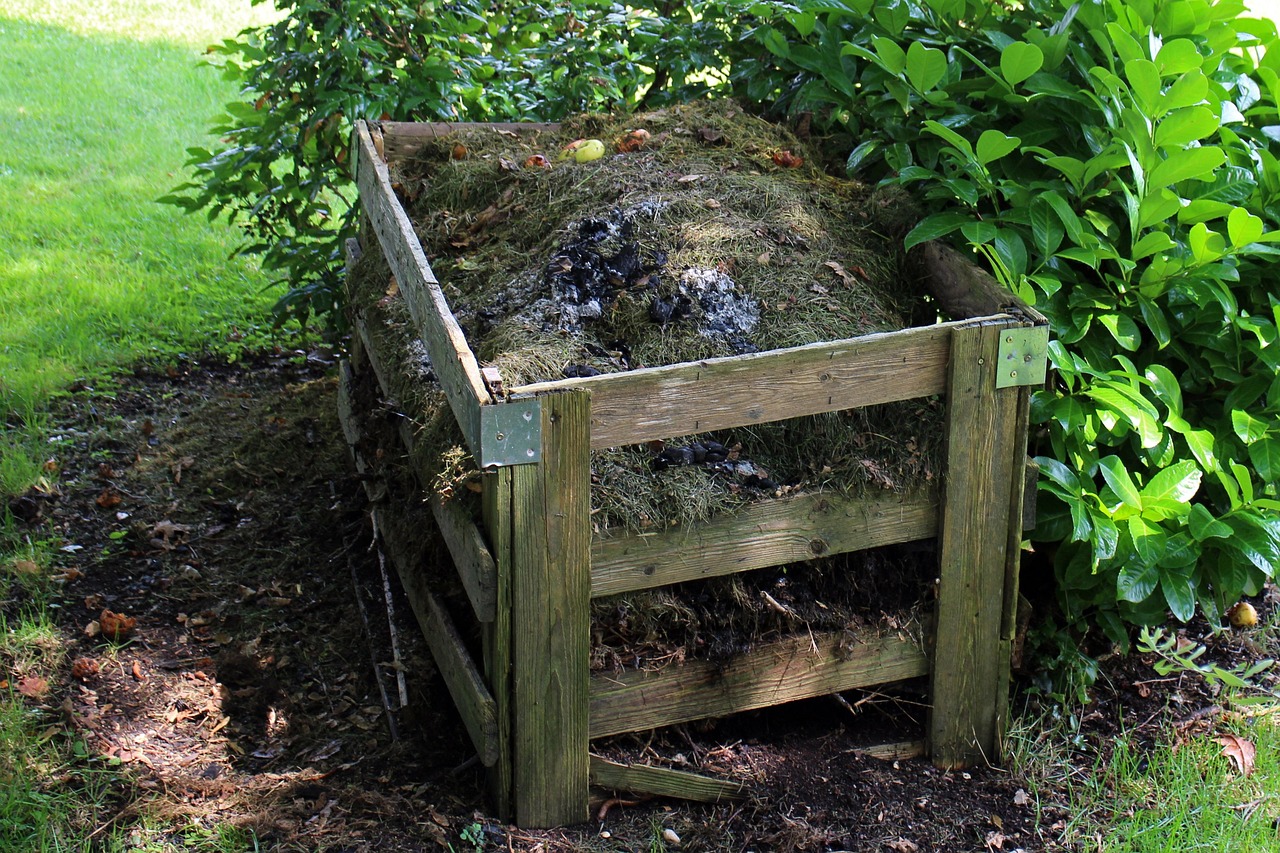

Imagine a world where your kitchen bin never smells, you never have to toss meat or dairy into the trash, and you can create world-class fertiliser right under your kitchen sink. It sounds like magic, but it’s actually a centuries-old Japanese secret called Bokashi Composting.
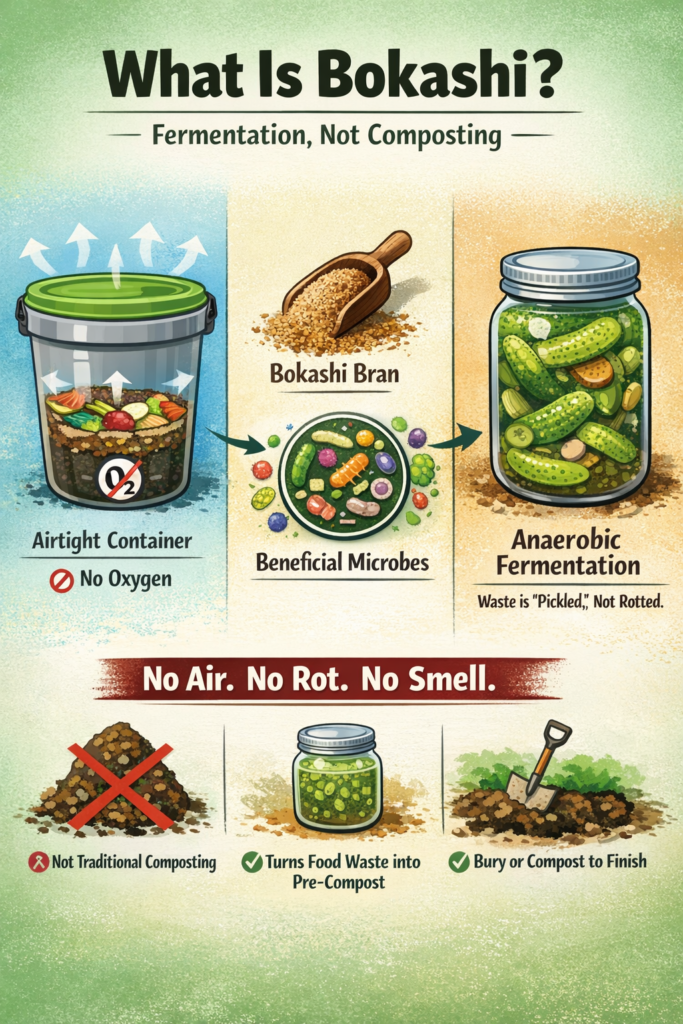
Unlike traditional composting, which relies on outdoor space, oxygen, and a “no-meat” rule, Bokashi is a sophisticated anaerobic fermentation process. By using a specialized bucket and a microbe-infused “bran,” you aren’t rotting your food waste you’re pickling it.
This isn’t just for gardeners with sprawling backyards. Bokashi is the ultimate “urban composting” solution, designed for apartment dwellers, busy families, and zero-waste enthusiasts who want a clean, fast, and odor-free way to shrink their carbon footprint. While a backyard pile can take a year to break down, Bokashi prepares your scraps for the soil in as little as 14 days.
In this guide, we’re going to pull back the curtain on this microbial powerhouse. We’ll show you exactly how to set up your system, why it’s scientifically superior to traditional methods, and how you can transform your “trash” into the most nutrient-dense soil amendment on the planet.
What Exactly is Bokashi Composting?
At its core, Bokashi composting is an anaerobic fermentation process. Unlike aerobic composting, which relies on oxygen-loving bacteria to break down organic matter, Bokashi thrives in an oxygen-deprived environment. This is achieved through the use of an airtight container and a special ingredient: Bokashi Bran.
Bokashi Bran is typically a wheat or rice bran that has been inoculated with a proprietary blend of Effective Microorganisms (EM). These EM cultures usually contain three main groups:
- Lactic Acid Bacteria: Similar to those found in yoghurt and sauerkraut, these create the acidic environment necessary for fermentation and suppress putrefying bacteria.
- Photosynthetic Bacteria: These perform various beneficial functions, including breaking down complex organic compounds and converting light energy.
- Yeast: These help to break down organic matter and produce beneficial substances.
When you add food scraps and Bokashi Bran to an airtight bin, these EM go to work, fermenting the organic material. This process is similar to how pickles or silage are made. The food scraps don’t rot; they undergo a biochemical change that preserves their nutrients and prevents the foul odors associated with putrefaction. Instead, you’ll typically notice a sweet, vinegary, or even slightly yeasty smell, akin to pickling.
The acidity created by the fermentation process is key. It effectively “pre-digests” the food waste, making it much easier and faster for soil microbes to fully break down once it’s buried. This dual-stage process, which involves fermentation in the bin followed by decomposition in the soil, is what makes Bokashi so uniquely powerful.
Why Bokashi?
Bokashi stands out from other composting methods for several compelling reasons, particularly for urban dwellers or those seeking a comprehensive solution for all food waste.
Key Advantages:
- Compost ALL Food Scraps: This is arguably Bokashi’s biggest selling point. Unlike traditional compost piles, Bokashi can safely handle meat, fish, dairy products, cooked foods, and even small bones. The anaerobic fermentation prevents these items from putrefying and attracting pests.
- Odorless (Mostly) & Pest-Free: When done correctly, a sealed Bokashi bin produces very little unpleasant odor. The fermentation process creates a sweet, pickly smell, not the foul stench of rotting food. The airtight nature also keeps flies, rodents, and other pests away.
- Space-Efficient: Bokashi bins are compact and can be kept discreetly indoors, under a sink, or in a utility room. This makes it ideal for apartments, condos, or small homes without yard space for a traditional bin.
- Fast Initial Processing: The fermentation process in the bin takes only 2-3 weeks. While the material still needs to break down fully in the soil, the initial, odor-producing stage is very quick.
- Nutrient Preservation: The fermentation process helps to retain more nutrients (especially nitrogen) in the food waste compared to the heat of aerobic composting, where some nutrients can volatilize.
- Enriches Soil Microbes: The Bokashi pre-compost, rich in EM, introduces a healthy boost of beneficial microorganisms to your garden soil, improving soil health and plant vitality.
- Produces “Bokashi Tea”: The liquid drained from the bin is a potent fertilizer, ideal for houseplants or diluted for garden use. It can also be used as a drain cleaner.
Bokashi vs. Traditional Composting
| Feature / Metric | Bokashi Fermentation (Anaerobic) | Traditional Composting (Aerobic) |
| Process Type | Fermentation (Pickling) | Decomposition |
| Oxygen Requirement | None (Anaerobic) | High (Aerobic) |
| Can Handle Meat/Dairy? | YES | No (Attracts pests, odors) |
| Odor (when sealed) | Minimal (sweet, pickled) | Earthy (if balanced), Foul (if unbalanced/wet) |
| Pest Attraction | Very Low (Airtight bin) | Moderate to High (Open pile) |
| Space Required | Small (indoor bin) | Moderate to Large (outdoor pile/bin) |
| Processing Time (Initial) | 2-3 weeks (fermentation) | 2-3 months (hot) to 12+ months (cold) |
| Nutrient Preservation | High (Nitrogen, Carbon retained) | Moderate (some nitrogen volatilization) |
| Output | Fermented “pre-compost” + “Bokashi Tea” | Finished compost |
| Final Breakdown Location | In soil or traditional compost | In the compost pile |
What You’ll Need to Start
Getting started with Bokashi is relatively straightforward and requires only a few key items.
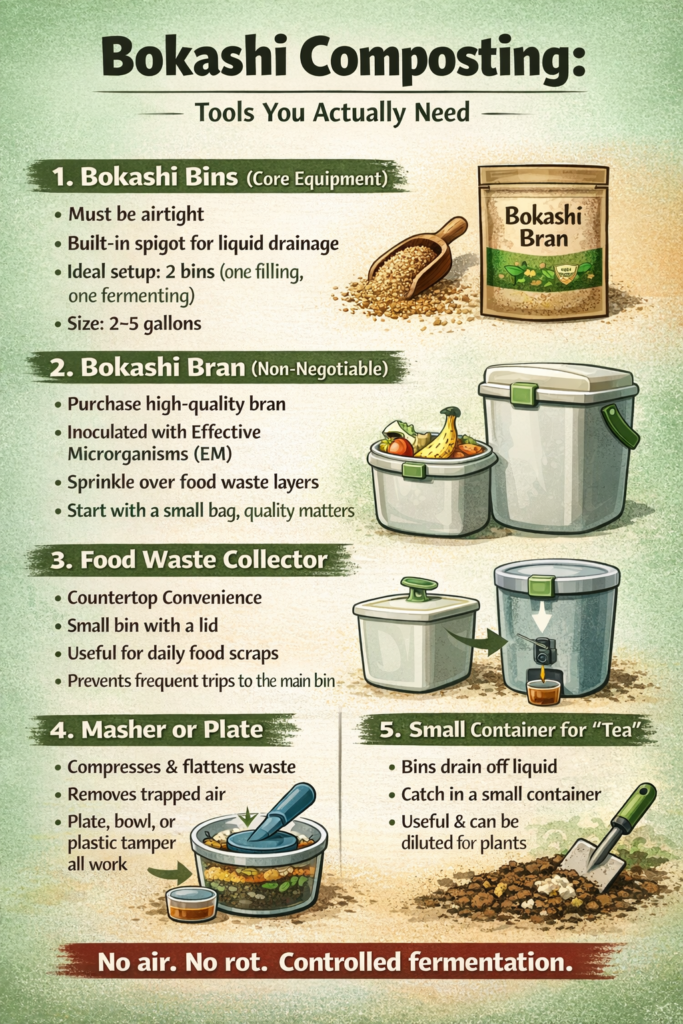
- Bokashi Bins: You’ll need at least one, but ideally two, specialized Bokashi bins. These bins are designed to be airtight and usually feature a spigot at the bottom to drain excess liquid (Bokashi Tea). Having two allows you to fill one while the other is fermenting, ensuring a continuous cycle. They typically range from 2-5 gallons in size.
- Bokashi Bran: This is the heart of the Bokashi system. Purchase high-quality bran inoculated with Effective Microorganisms (EM). It comes in various sizes, so start with a smaller bag to get a feel for it.
- Food Waste Collector: A small counter-top bin with a lid is useful for collecting your daily food scraps before transferring them to the Bokashi bin.
- Masher or Plate: Something flat to compress the food waste and remove air pockets. A simple plate or a dedicated tamper works well.
- Small Container for “Tea”: To catch the liquid drained from the spigot.
- Garden Trowel or Shovel: For burying the fermented material.
Step-by-Step Guide.
Mastering Bokashi is simple once you understand the process. Follow these steps for successful fermentation:
Step 1: Prepare Your Bin
Ensure your Bokashi bin is clean and the spigot is securely closed. You can place a small handful (about 1-2 tablespoons) of Bokashi Bran at the bottom of the bin to kickstart the process and help with drainage.
Step 2: Add Food Scraps
Start adding your kitchen waste. Aim for smaller pieces (1-2 inches) as they will ferment more quickly. You can add a single meal’s worth or collect a day’s worth of scraps in your countertop bin.
- YES: Vegetable and fruit scraps, meat, fish, cooked foods, dairy, coffee grounds, tea bags, eggshells, small bones.
- NO: Excessive liquids (soups, milk, juice, oils), very large bones, paper, plastic, diseased plants, pet waste.
Step 3: Sprinkle Bokashi Bran
For every 1-2 inches of food waste you add, sprinkle 1-2 tablespoons of Bokashi Bran evenly over the top. If you’re adding particularly moist or smelly items (like meat), you can add a bit more bran.
Step 4: Compress the Contents
This is a critical step! Use your masher or a flat plate to press down firmly on the food scraps. The goal is to remove as much air as possible from the bin. The EM thrive in an anaerobic environment, so minimizing oxygen is crucial for proper fermentation and preventing putrefaction.
Step 5: Seal the Lid Tightly
Immediately after adding and compressing, replace the lid and ensure it forms an airtight seal. This maintains the anaerobic conditions inside.
Step 6: Repeat Until Full
Continue steps 2-5 daily or as you generate food waste. Each time you open the bin, try to be quick to minimize oxygen exposure.
Step 7: The Fermentation Phase (2 Weeks)
Once your Bokashi bin is full, seal it tightly and set it aside for 2 weeks to allow the fermentation process to complete. Store it in a relatively warm, consistent temperature (room temperature is ideal) away from direct sunlight. Do NOT open the lid during this phase.
Step 8: Drain the Bokashi Tea
During the fermentation period, especially after the first few days, liquid (Bokashi Tea) will start to accumulate at the bottom. Drain this liquid every 2-3 days by opening the spigot. This tea is a valuable resource don’t discard it!
6. The Crucial Post-Fermentation Phase.
After the 2-week fermentation period, your food waste will have transformed into “Bokashi pre-compost.” It will still look largely like food, but it will have a distinctive sweet, pickled, or yeasty aroma. It will also be softer and darker. This material is not finished compost yet; it needs to undergo a final decomposition phase.
Options for Finishing Your Bokashi.
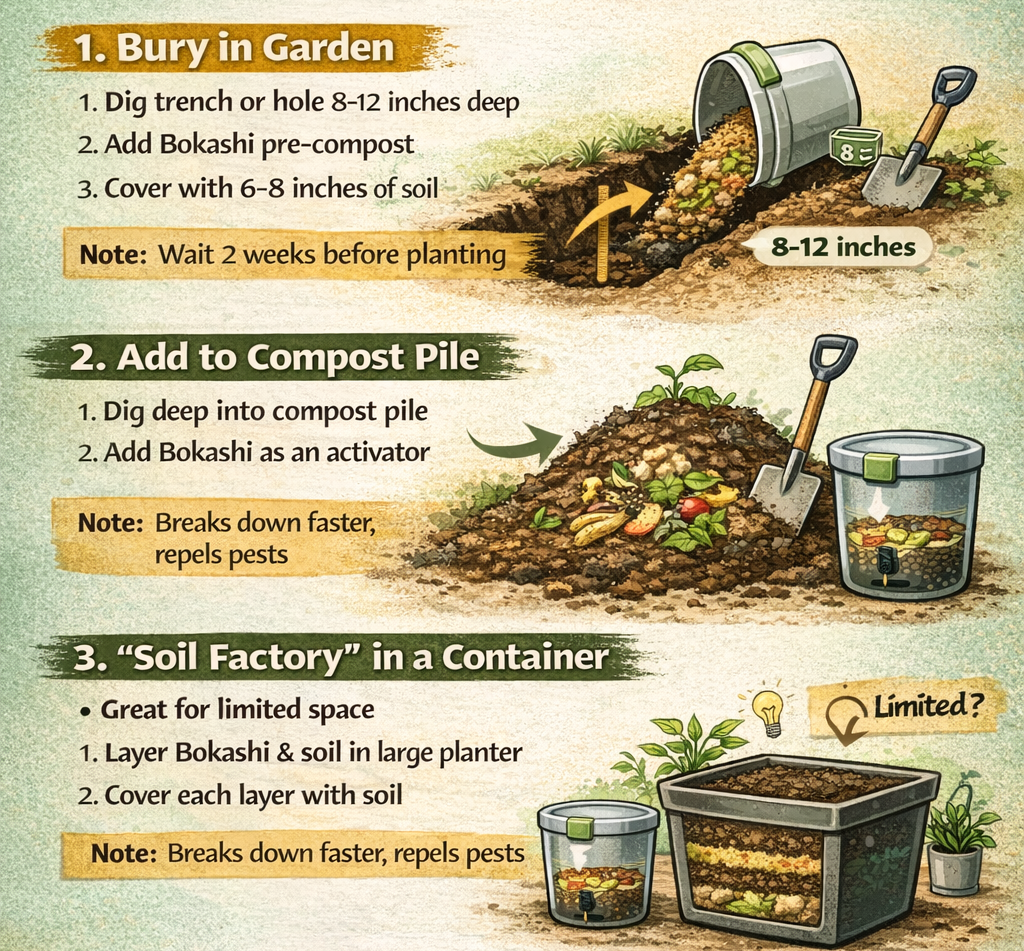
- Burying in the Garden/Yard: This is the most common and effective method.
- Dig a trench or hole about 8-12 inches deep in your garden bed, beneath a tree, or in an unused corner of your yard.
- Empty the Bokashi pre-compost into the hole.
- Cover it completely with at least 6-8 inches of soil, ensuring no fermented material is exposed.
- The pre-compost will break down quickly in the soil, typically within 2-4 weeks, depending on soil temperature and moisture. Avoid planting directly over newly buried Bokashi for about 2 weeks, as its acidity can temporarily harm young plants.
- Adding to a Traditional Compost Pile: If you have an existing compost pile, Bokashi pre-compost can be a fantastic “activator.”
- Bury the Bokashi material deep within your traditional compost pile. This will introduce beneficial microbes and jumpstart decomposition.
- The fermented material will break down much faster than raw food scraps and won’t attract pests.
- Using a Designated “Soil Factory”: For those with limited garden space, you can create a dedicated “soil factory” in a large planter or container.
- Layer soil and Bokashi pre-compost in the container.
- Cover each layer of Bokashi with several inches of soil.
- Allow it to fully decompose for a few weeks, and you’ll have fresh, nutrient-rich potting soil.
7. Common Bokashi Problems (The “Smell Test”)
While Bokashi is generally forgiving, occasionally things can go awry. Your nose is your best tool for diagnosis.
- Foul, Rotten Smell: This is the most common problem and indicates that putrefaction (rotting) has occurred instead of fermentation.
- Cause: Too much oxygen exposure (lid not sealed, not enough compression), too much liquid in the bin, insufficient Bokashi Bran, or contaminants.
- Solution: If it’s early in the process, you might try adding more Bokashi Bran and compressing thoroughly, then ensuring an airtight seal. If the smell is overwhelming or there’s mold that isn’t white (see below), it’s best to discard the contents in your regular trash and start fresh.
- White Mold/Fuzzy Growth: This is actually a good sign! It indicates successful fermentation and the presence of beneficial fungi.
- Cause: Healthy fermentation.
- Solution: No action needed. Continue the process.
- Green or Black Mold: This indicates undesirable mold and potential contamination.
- Cause: Non-Bokashi microbes growing due to too much oxygen or contaminants.
- Solution: Discard the affected material to prevent issues.
- No “Bokashi Tea”:
- Cause: Food scraps are too dry, or the bin hasn’t accumulated enough moisture.
- Solution: Don’t worry too much. While the tea is beneficial, its absence doesn’t necessarily mean failure. If the contents are fermenting well, continue as usual. You can try adding slightly more moist scraps in future batches.
8. Bokashi Tea.
The liquid you drain from your Bokashi bin is a powerful byproduct, often called “Bokashi Tea” or “Compost Tea.” It’s rich in nutrients and active microorganisms, making it a fantastic natural fertilizer and soil conditioner.
How to Use Bokashi Tea.
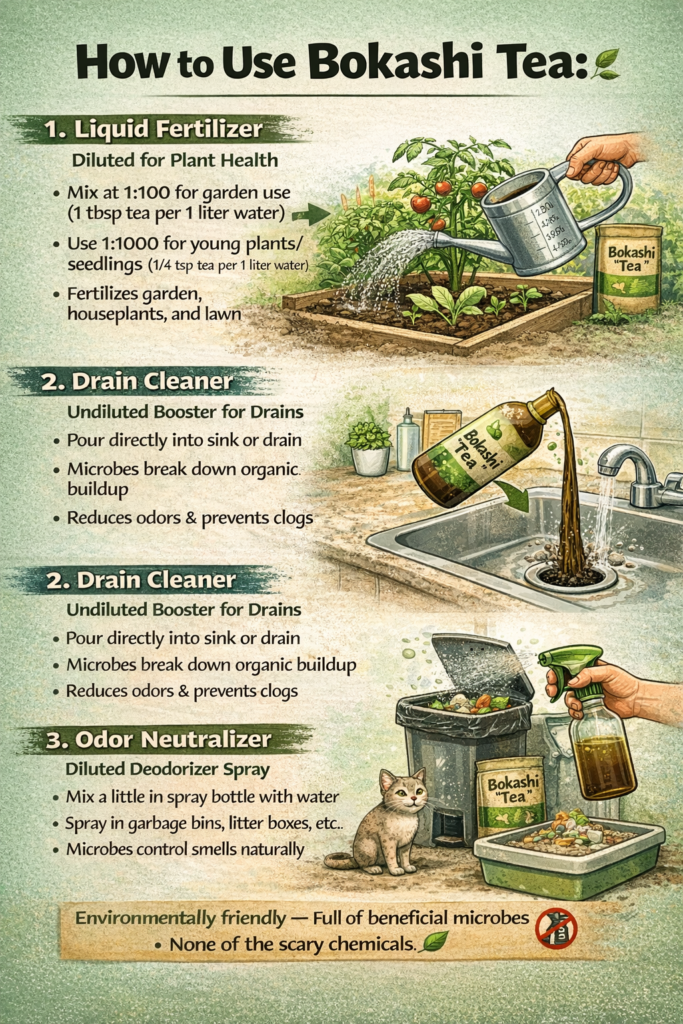
- Liquid Fertilizer: Dilute the Bokashi Tea at a ratio of 1:100 (e.g., 1 tablespoon of tea per liter of water) for established plants. For younger plants or seedlings, dilute even further (1:1000). Use it to water your garden, houseplants, or even your lawn.
- Drain Cleaner: Undiluted Bokashi Tea can be poured down sinks or drains. The beneficial microbes help break down organic buildup, reducing odors and preventing clogs, all while being environmentally friendly.
- Odor Neutralizer: Diluted tea can also be used as a spray to neutralize odors in pet areas or garbage bins.
Important: Bokashi Tea is potent! Always dilute it before applying to plants to avoid nutrient burn. Use it within 24-48 hours of draining, as its efficacy decreases over time.
9. Environmental Impact
Bokashi composting offers significant environmental benefits that extend beyond simply reducing landfill waste. Its unique anaerobic process plays a crucial role in mitigating greenhouse gas emissions and enhancing soil health.
Greenhouse Gas Reduction.
Traditional landfill decomposition of organic waste is anaerobic, but in a chaotic, uncontrolled environment. This leads to the release of methane (CH4), a greenhouse gas that is 25-80 times more potent than carbon dioxide over a 20-year period. Bokashi’s controlled anaerobic fermentation process, however, largely avoids methane production. The carbon in the food waste remains in the fermented material, which is then re-integrated into the soil, where it can be sequestered.
Also read: How to start composting in 2026.
Soil Carbon Sequestration.
By burying Bokashi pre-compost, you are directly adding organic carbon back into the soil. Increasing soil organic carbon improves soil structure, water retention, and nutrient availability. Healthy soil acts as a carbon sink, helping to draw carbon dioxide out of the atmosphere.
Reduced Need for Chemical Fertilizers.
The nutrient-rich Bokashi pre-compost and tea provide a natural, slow-release source of plant nutrition. This reduces reliance on synthetic chemical fertilizers, which can contribute to waterway pollution through runoff and require significant energy to produce.


[…] 5. Bokashi Composting […]
[…] Also read: What is Bokashi Composting? […]
[…] Also read: What is Bokashi Composting? […]
[…] Bokashi Systems: Small, airtight bins that use “effective microorganisms” to ferment meat and dairy, items usually banned from traditional compost. […]
[…] Also read: What is Bokashi Composting? […]