CIRCULAR SAVINGS TRACKER
Stop paying for what you already own.
Why Your Trash is a Leaking Asset
Let’s stop pretending that wealth is only built at a desk. Most people are obsessively focused on their income while completely ignoring their outflow. And I’m not talking about your Netflix subscription. I’m talking about the physical assets you pay to have hauled away every single week. In a linear economy, you are a consumer. You buy, you use, you discard. In the Wealth Income economy, you are an operator. You buy, you use, and then you recover.
The Illusion of “Trash”
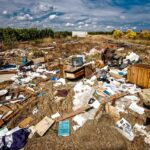
“Trash” is a marketing term invented to make you comfortable with waste. In reality, there is no such thing as trash there are only unallocated resources. When you throw away a broken microwave, you aren’t just getting rid of an eyesore. You are throwing away:
- High-grade Copper (The power cord and transformer).
- Ferrous Steel (The casing).
- Core Components (The magnetron).
By the time that microwave hits the landfill, you’ve essentially handed a $10–$15 dividend to whoever picks it up. Do that fifty times a year across your entire household, and you’ve just paid a “cluelessness tax” of $750.
Circular Frugality
Traditional frugality is about deprivation (buying less). Circular Frugality is about optimization (extracting more). The goal of the Wealth Income Terminal is to close the loops in their own life. If you buy a cotton t-shirt, it should never reach a landfill. It should serve as clothing, then as a shop rag (saving you the cost of buying new rags), and finally as a source of material for another project.
This isn’t about being “green.” It’s about reclaiming your margins.
The Wealth Audit.
You cannot manage what you do not measure. This week, I want you to perform a Wealth Audit on your own bins. Before a bag leaves your house, ask three questions:
- Is there metal in here?
- Does this have a ‘Core Value’?
- Can this replace a future purchase? (Cardboard for garden mulch, glass for storage, textiles for cleaning.)
Stop Leaking Capital
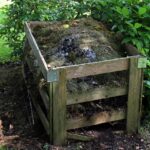
Wealth is built by the accumulation of small advantages. If you can eliminate your grocery waste through composting and your household supply costs through upcycling, you’ve effectively given yourself a tax-free raise. Trash doesn’t turn into money by accident. It turns into money when you decide to operate where others are too “dignified” to look.