
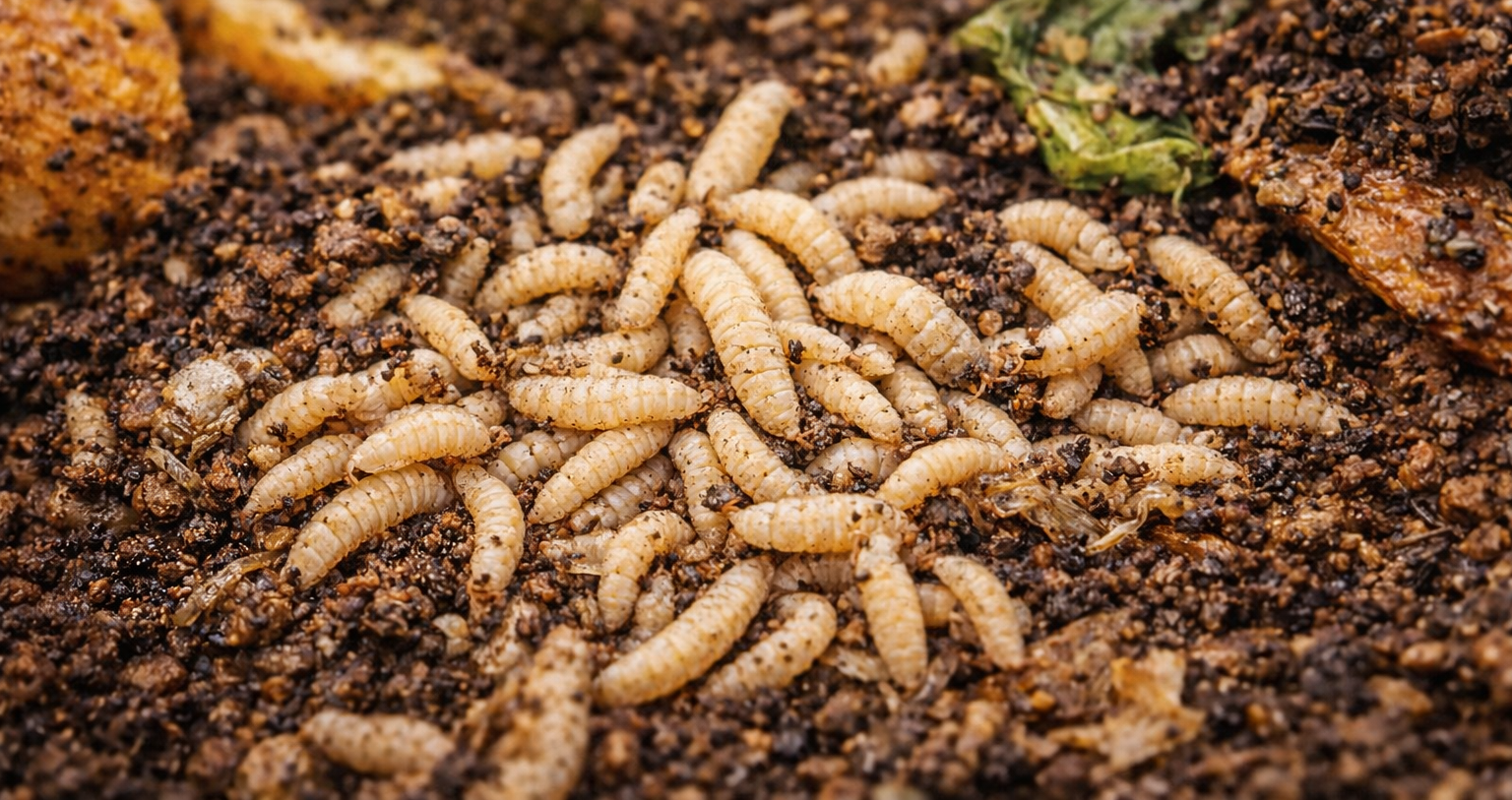

There is nothing quite like the stomach-dropping moment of opening your compost bin only to find the surface writhing with tiny, pale larvae. It’s enough to make even the most dedicated gardener want to give up on “going green” forever. Whether you are dealing with tiny fruit fly maggots in compost or the larger, armored-looking black soldier fly maggots in compost, that initial “ick” factor is hard to ignore.
While many beginners ask, “Are maggots in compost good or bad?”, the answer is rarely a simple “yes” or “no.” In fact, finding maggots in a compost bin is one of the most common issues in organic gardening.
If you are currently facing an infestation and wondering how to get rid of maggots in a compost bin without ruining your soil with chemicals, you’ve come to the right place. In this guide, we will break down exactly what kills maggots in compost safely, the science behind why they showed up in the first place, and most importantly, how to avoid maggots in compost.
Maggots in Compost, Good or Bad?
Before we talk about eradication, we need to identify what exactly is crawling in your bin. Not all larvae are created equal.
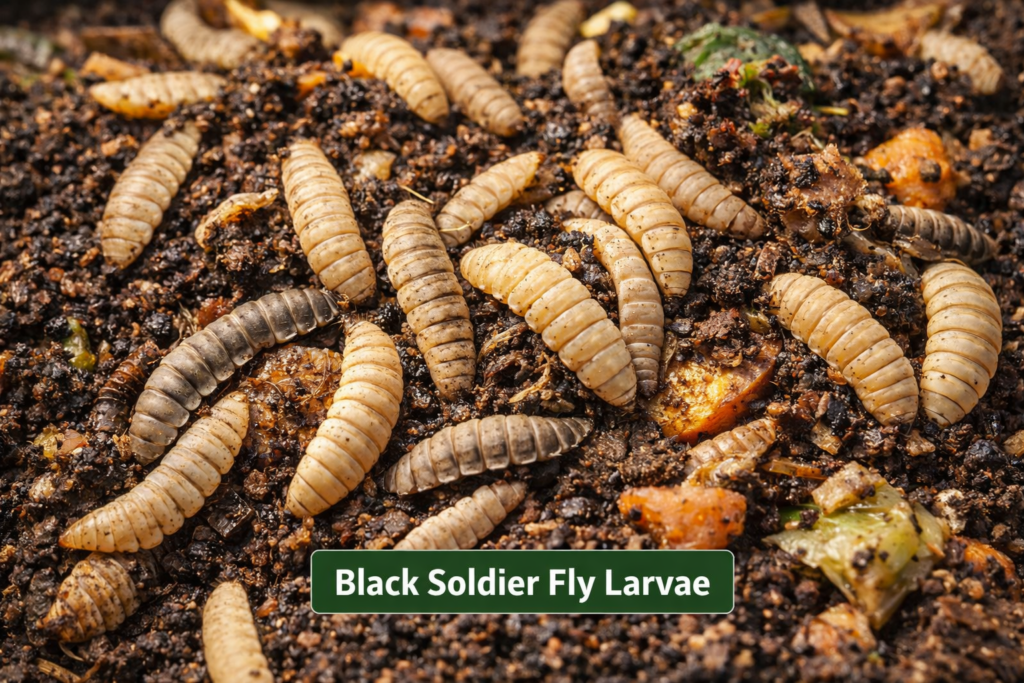
- Black Soldier Fly Larvae (BSFL): These are the most common “maggots” found in home bins. They are typically oversized, brownish-grey, and look like flattened, segmented torpedos.
- The Verdict: Good (mostly). These guys are composting machines. They can eat their weight in food scraps every day and significantly speed up decomposition. However, they can be unsightly and sometimes outcompete your earthworms.
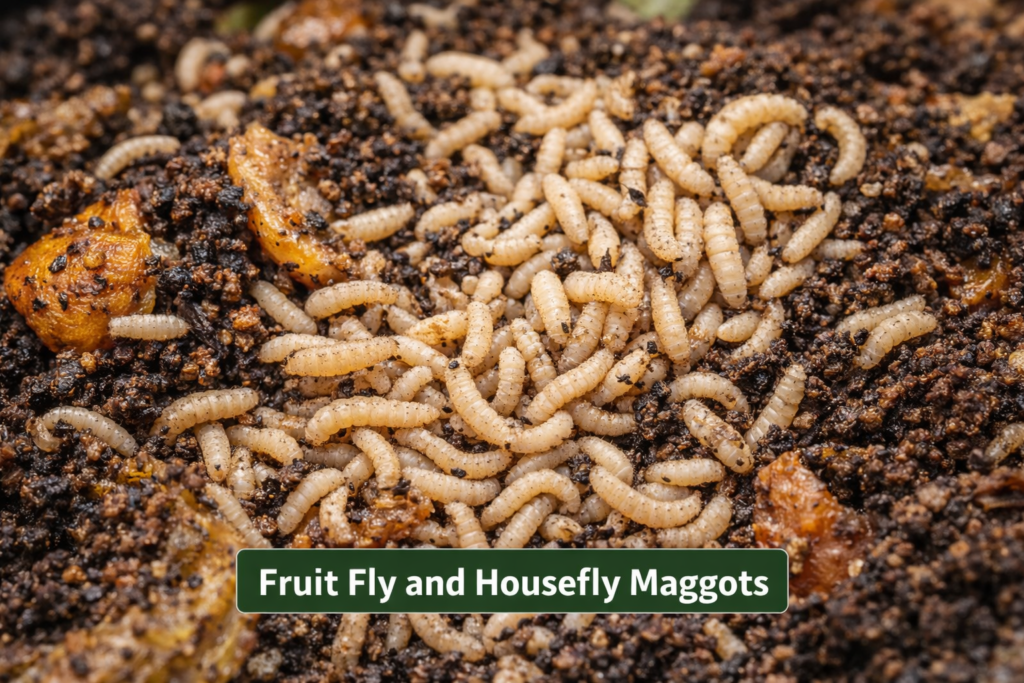
- Fruit Fly and Housefly Maggots: These are small, creamy white, and look like traditional “slimy” maggots.
- The Verdict: Bad. These are usually a sign that you have too much wet nitrogen (food scraps) and not enough airflow. They can carry pathogens and make the composting experience very unpleasant.
Why Do Maggots Appear?
Flies are attracted to your compost for very specific reasons. Understanding these will help you understand how to avoid maggots in compost in the long run.
- Exposed Food Scraps: Leaving fruit peels or vegetable waste right on top of the pile is like putting out a “Vacancies” sign for flies.
- Too Much Moisture: A soggy, wet bin creates the perfect anaerobic environment for fly eggs to hatch.
- Low Carbon Levels: If your bin is mostly “Greens” (kitchen waste) and lacks “Browns” (cardboard, dry leaves), it becomes a smelly breeding ground.
- The Wrong Ingredients: Adding meat, dairy, or oily foods is the fastest way to attract housefly maggots.
How to Get Rid of Maggots in a Compost Bin?
If you are currently dealing with a swarm and need immediate relief, you need to know what kills maggots in compost without harming the beneficial microbes.
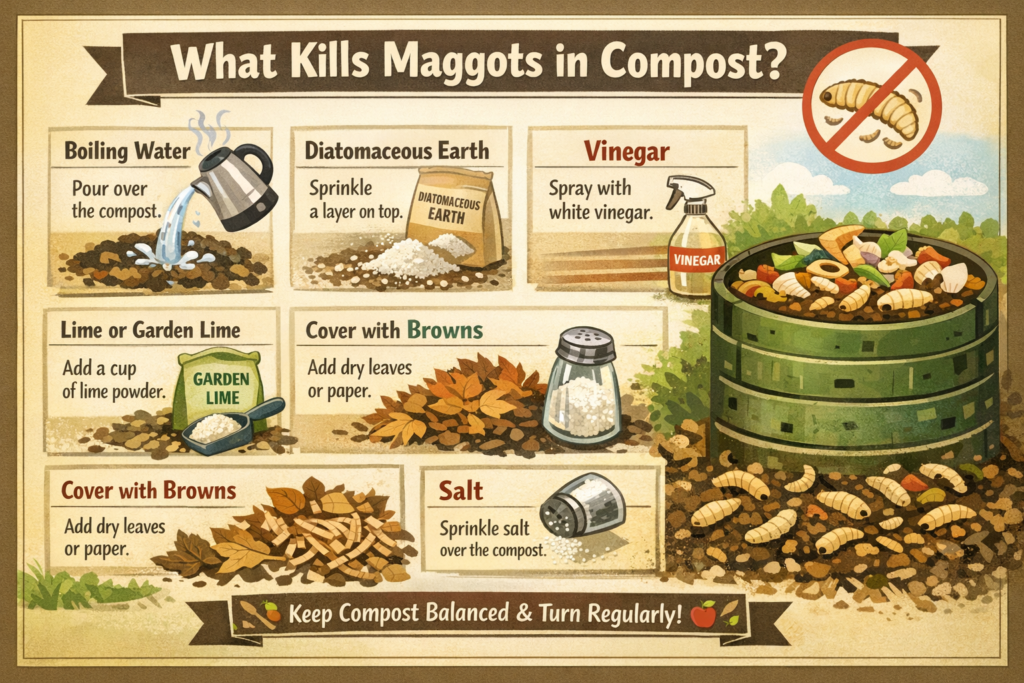
- The Boiling Water Method: Pouring boiling water over the most infested areas is the quickest way to kill larvae on contact.
- Diatomaceous Earth (DE): Sprinkle a layer of food-grade DE on top of your pile. This natural powder is harmless to humans but acts like “broken glass” to soft-bodied larvae, dehydrating them instantly.
- Lime or Wood Ash: Maggots prefer an acidic environment. Sprinkling a little agricultural lime or wood ash increases the pH level, making the bin inhospitable for them.
- Vinegar Spritz: A 50/50 mix of water and white vinegar can help kill fruit fly larvae and neutralize the odors that attract adult flies.
Also read: Best bedding for worms
How to Avoid Maggots in Compost?
Once you’ve cleared the infestation, you need to change your habits to ensure they don’t return. Here is the foolproof strategy:
I. The “Capping” Technique
Never leave “Greens” exposed. Every time you add food scraps, cover them with at least 2-3 inches of “Browns.” This can be shredded paper, dried leaves, or straw. This acts as a bio-filter, trapping odors and preventing flies from reaching the food to lay eggs.
II. Adjust Your Ratios
Aim for a Carbon-to-Nitrogen ratio of roughly 3:1. A pile that is rich in carbon (browns) will stay drier and heat up more efficiently. High heat is the ultimate maggot deterrent.
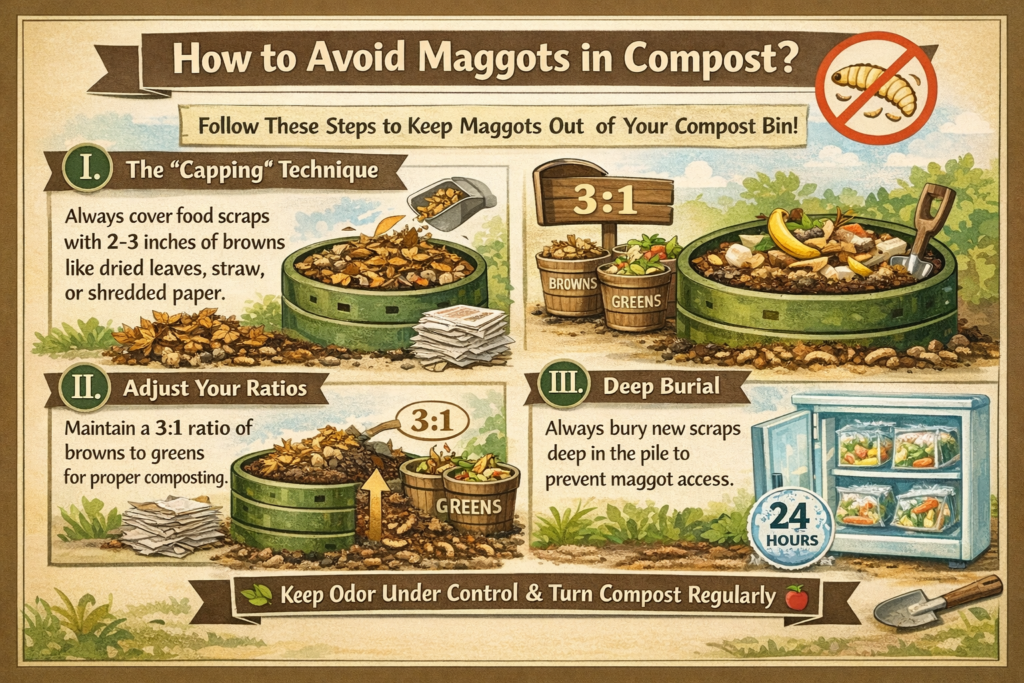
III. Deep Burial
Instead of dumping scraps on top, use a garden fork to dig a hole into the center of the pile. Dump your waste there and bury it. The internal heat of the compost will often destroy eggs before they hatch.
Also read: How to start vermicomposting (worm composting).
IV. The “Freeze First” Method
If you have a recurring problem with fruit fly maggots in compost, try freezing your kitchen scraps in a bag for 24 hours before adding them to the bin. This kills any eggs that might have come in from the grocery store on fruit skins.
Summary Table
| Problem | Cause | Quick Fix |
| Small White Maggots | Fruit flies / Wet pile | Add dry cardboard; use the “Capping” method. |
| Large Brown Larvae | Black Soldier Flies | Generally okay, but turn the pile to increase heat. |
| Smelly, Slimy Bin | Too much Nitrogen | Add lime and more brown material. |
| Active Fly Swarm | Exposed food scraps | Bury scraps 6 inches deep and use a lid screen. |
Conclusion
Learning how to avoid maggots in compost is a vital skill for any organic gardener. While the sight of larvae can be jarring, remember that they are simply a symptom of an imbalanced pile. By managing your moisture, increasing your carbon “browns,” and burying your food scraps deeply, you can maintain a clean, efficient, and maggot-free composting system.
FAQ
- Can I still use compost that has maggots in it? A: Yes! Once the larvae pupate and leave or die off, the compost is perfectly safe for your garden. In fact, their excrement (frass) is a highly concentrated fertilizer.
- Does vinegar kill maggots in compost? A: Yes, a strong vinegar solution can kill small fruit fly maggots on contact, but it is less effective against the tougher, armored Black Soldier Fly larvae.
- Will maggots in my compost hurt my plants? A: No. Compost maggots eat decaying organic matter, not living plant roots. They are strictly “decomposers” and will not bother your living garden.

[…] Also read: How to Avoid Maggots in Compost in 4 Easy Steps. […]