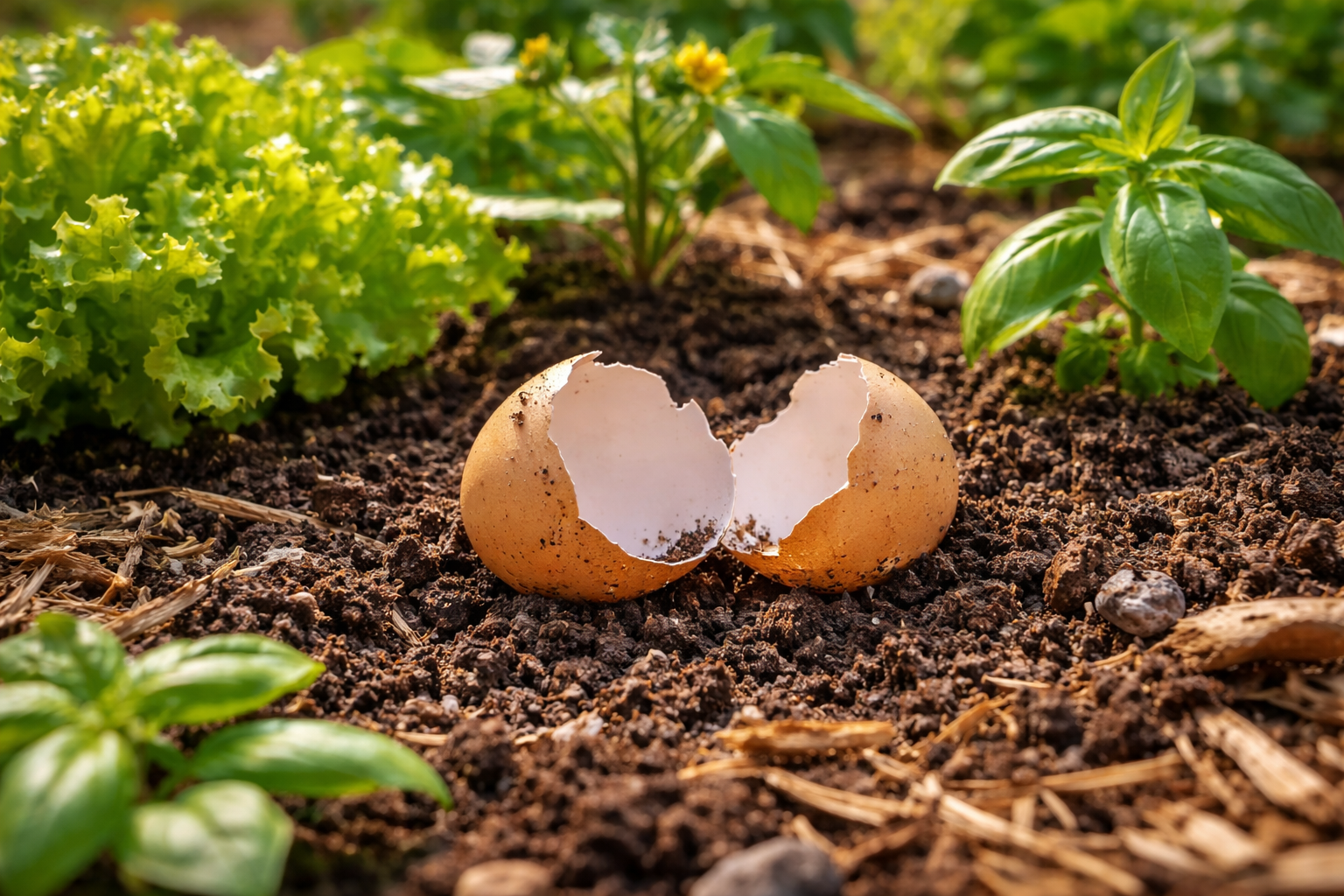

Eggshells are one of the most underrated tools in a gardener’s arsenal. Most people toss them into the trash without a second thought, but if you are looking to cultivate a thriving, organic space, learning how to use eggshells in garden beds can be a game-changer.
If you have been searching for how to effectively use eggshells in garden beds, you are in the right place. Beyond just being a “cool recycling trick,” eggshells provide essential minerals and structural benefits to your soil that can transform your harvest.
In this comprehensive guide, we will explore the science, the methods, and the myths surrounding the use of eggshells to help you cultivate a thriving, organic sanctuary.
Why Use Eggshells in Garden Soil?
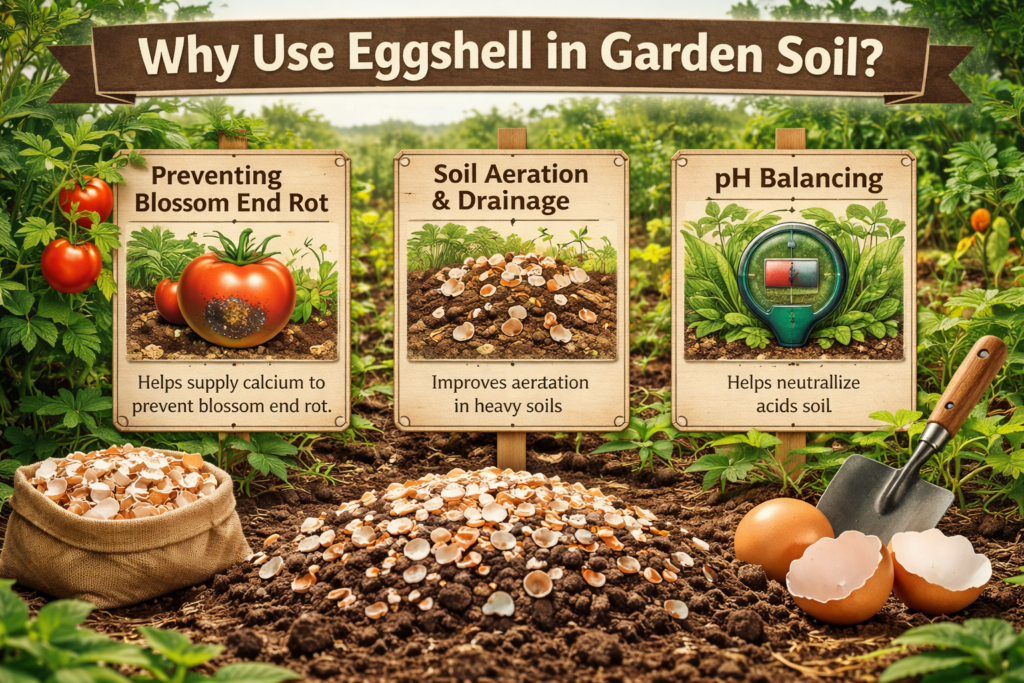
Before we dig into the “how,” we need to understand the “why.” The primary component of an eggshell is calcium carbonate (about 95-97%). Calcium is a critical secondary nutrient for plants, acting much like it does in humans: it builds strong “bones” or in this case, cell walls.
1. Preventing Blossom End Rot
If you have ever grown tomatoes, peppers, or eggplants and found a sunken, black, leathery spot on the bottom of the fruit, you’ve encountered Blossom End Rot. This isn’t a disease, but a nutritional deficiency. Integrating eggshells in garden soil provides a slow-release source of calcium that helps prevent this heartbreaking harvest loss.
2. Soil Aeration and Drainage
When crushed into larger shards, eggshells don’t just provide nutrients; they improve soil structure. In heavy clay soils, these fragments create tiny air pockets, allowing roots to breathe and water to move more freely.
3. pH Balancing
While not as potent as agricultural lime, the calcium carbonate in eggshells can help neutralize overly acidic soil over a long period. It is a gentler way to nudge your soil toward a neutral pH.
Also read: How to Avoid Maggots in Compost in 4 Easy Steps.
How to Prepare Your Eggshells
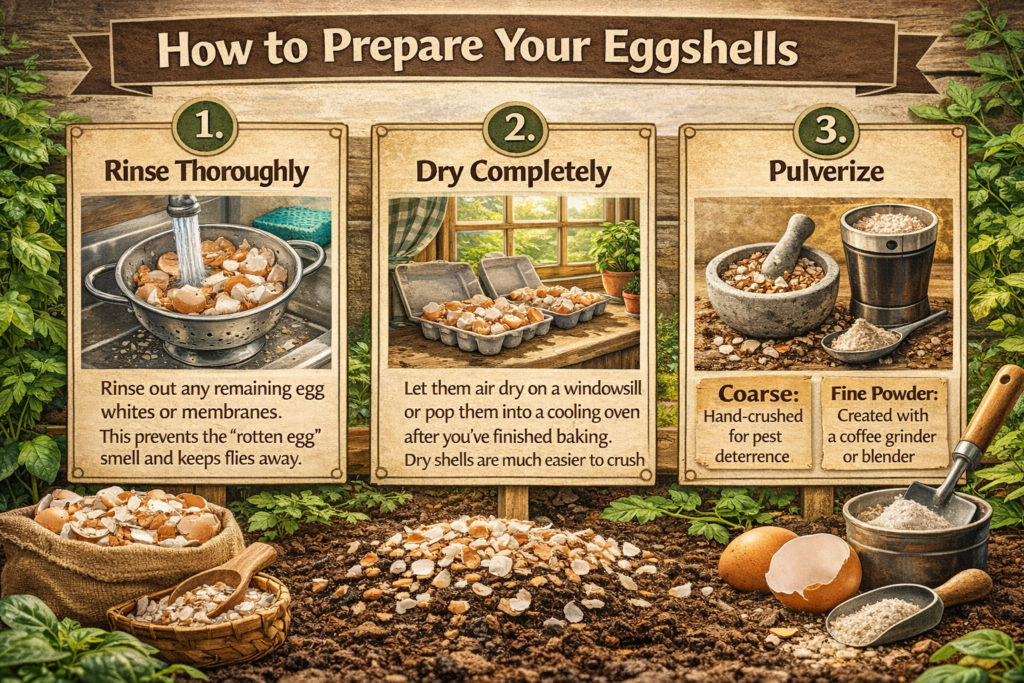
You shouldn’t just toss a wet, cracked egg directly onto your rosebushes. Proper preparation ensures you aren’t attracting unwanted pests or creating an odor.
- Rinse Thoroughly: Rinse out any remaining egg whites or membranes. This prevents the “rotten egg” smell and keeps flies away.
- Dry Completely: Let them air dry on a windowsill or pop them into a cooling oven after you’ve finished baking. Dry shells are much easier to crush.
- Pulverize: The smaller the piece, the faster the nutrients reach your plants.
- Coarse: Hand-crushed for pest deterrence.
- Fine Powder: Created with a coffee grinder or blender for immediate nutrient uptake.
5 Effective Ways to Use Eggshells in Garden Beds
1. The Planting Hole Power-Up
When transplanting seedlings, especially heavy feeders like tomatoes, drop two tablespoons of finely crushed eggshells into the bottom of the hole. As the roots grow, they will encounter this concentrated “calcium bomb” right when they need it most during the flowering stage.
2. Natural Pest Deterrent
There is a long-standing garden theory that coarse, jagged eggshell shards act like “broken glass” to soft-bodied pests.
- Slugs and Snails: Create a wide, thick perimeter of crushed shells around vulnerable leafy greens.
- Cutworms: A ring of shells around the base of a new seedling can prevent these larvae from wrapping around and “felling” your plants.
3. Enrichment for Your Compost Pile
If you don’t want to apply them directly to the soil, the compost bin is the perfect home for an eggshell in garden strategy. They add mineral weight to your “black gold” and help balance the acidity of green kitchen scraps like citrus peels or coffee grounds.
4. Seed Starting Pots
For a zero-waste garden, use half-shells as biodegradable seed starters.
- Prick a tiny drainage hole in the bottom.
- Fill with seed-starting mix and a seed.
- When the seedling is ready, gently crack the shell and plant the whole thing in the ground.
5. Fertilizer Tea
For a quick calcium boost, make “Eggshell Tea.” Boil a gallon of water, add 10-20 clean, dry eggshells, and let it sit overnight. Strain the liquid and use it to water your indoor or outdoor plants.
Also read: 3 Best bedding for worms.
Why Hang Eggshells in Garden?
You may have seen old-fashioned gardens where eggshells are perched atop sticks or hung in mesh bags. While some believe this scares away “Cabbage White” butterflies (who supposedly think the white shells are territorial rivals), there is little scientific evidence to back this up. Most modern gardeners prefer incorporating the eggshells in garden soil where the nutrients can actually be utilized.
Common Mistakes to Avoid
- Using Large Chunks: Big pieces of shell can take years to decompose. If you want results this season, use a grinder.
- Neglecting the “Rinse”: Unwashed shells can attract raccoons, rats, or neighborhood cats.
- Expecting Instant Results: Eggshells are a “slow-burn” fertilizer. For an immediate calcium crisis, you might need a liquid supplement while your eggshells break down for the long term.
| Plant Type | Benefit of Eggshells | Application Method |
| Tomatoes | Prevents Blossom End Rot | Powder in planting hole |
| Succulents | Improves drainage | Mix coarse shards into potting soil |
| Broccoli | Deters Cabbage Worms | Surface mulch around base |
| Roses | Strengthens stems | Top-dress and scratch into soil |
Final Thoughts
Think of your kitchen as a laboratory and yourself as a garden alchemist. By incorporating eggshells in garden routines, you are performing a small miracle: turning breakfast scraps into the literal skeletal strength of your future harvest. It’s more than just recycling; it’s a closed-loop revolution. Whether you pulverise them into a ‘calcium snow’ for your tomatoes or deploy jagged barricades to outsmart slugs, you’re giving your soil a gift that keeps on growing.”