
There is nothing quite like the “black gold” of a healthy compost pile to make a gardener feel accomplished. But when you step into your backyard and are met with the sharp, nose-stinging scent of ammonia, that feeling of accomplishment quickly turns into concern.
An ammonia smell is a clear signal from your compost pile that the delicate balance of chemistry and biology has shifted. While it’s a common issue, it’s one you need to address immediately to save your nutrients and keep your neighbors happy.
Why does your compost Smells Like Ammonia?
To fix the smell, we first have to understand the chemistry. Composting is the process of aerobic (oxygen-based) decomposition. Your pile is essentially a living organism made of billions of microbes.
The Nitrogen Overload
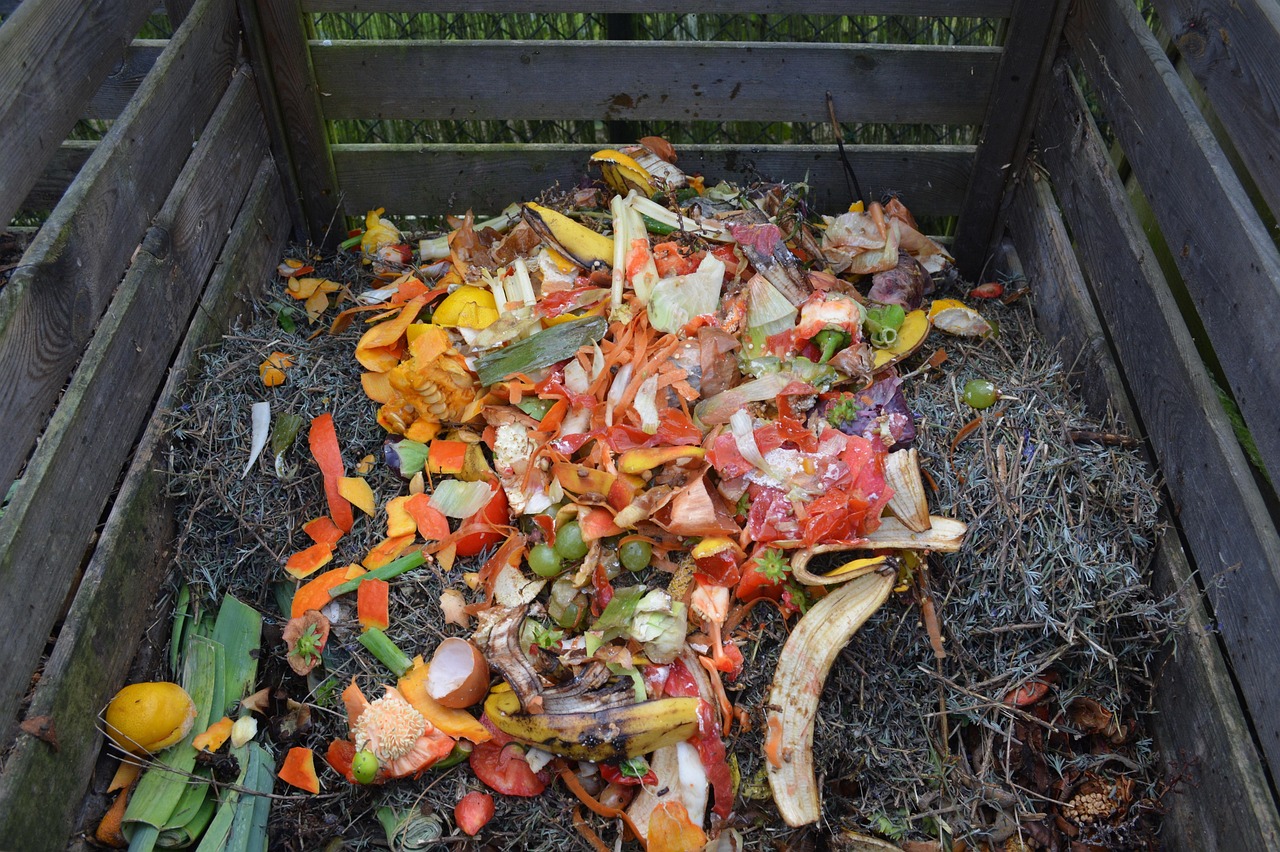
The most common reason for an ammonia scent is an excess of nitrogen. Nitrogen-rich materials (often called “Greens”) include grass clippings, kitchen scraps, and fresh manure.
When there is too much nitrogen and not enough carbon (“Browns”) to balance it out, the microbes cannot process the nitrogen fast enough. The excess nitrogen is converted into ammonia gas (NH_3), which then escapes into the air. This process is known as volatilisation. Not only does this smell bad, but it means your compost is literally losing the valuable nitrogen your plants need.
High pH Levels
Ammonia gas is more likely to release when the pH of your pile becomes too alkaline (above 7.5 or 8.0). This often happens if you’ve added too much lime or wood ash to the pile.
What Went Wrong?
If your pile smells like a cleaning product, look for these specific triggers:
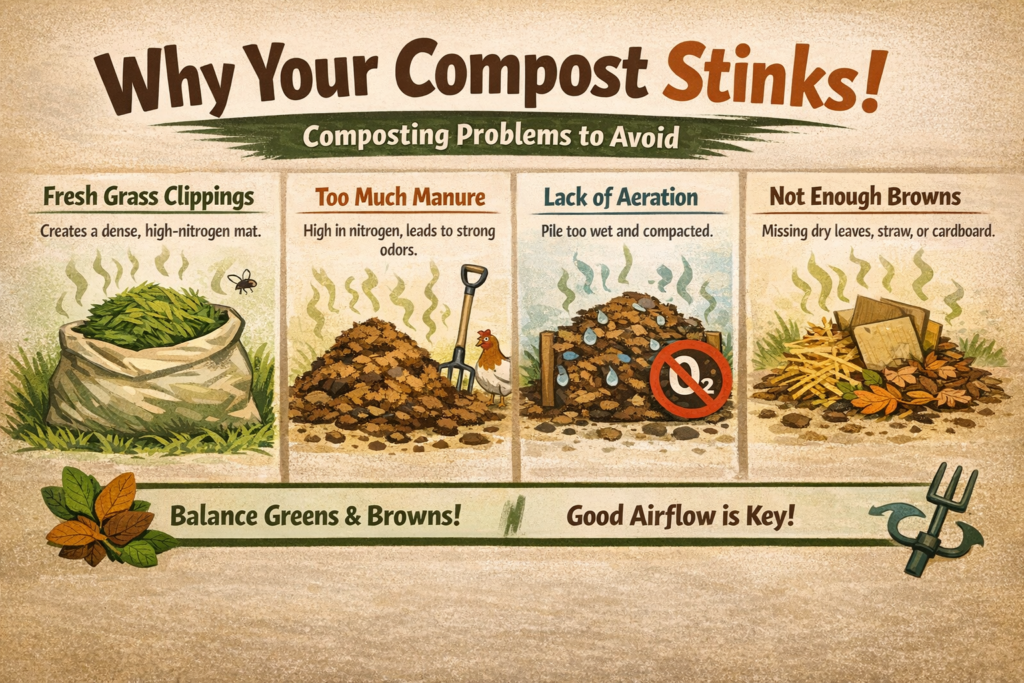
- Fresh Grass Clippings: This is the #1 offender. Adding a massive bag of fresh, wet grass creates a dense, high-nitrogen mat that generates ammonia almost instantly.
- Too Much Manure: While great for heat, fresh poultry or horse manure is incredibly high in nitrogen.
- Lack of Aeration: If the pile is too wet or compacted, oxygen can’t get in. This forces the pile into an anaerobic state, which can exacerbate foul odors.
- Insufficient “Browns”: You might have the right amount of food scraps, but if you forgot the straw, dried leaves, or cardboard, there’s nothing to “lock-in” the nitrogen.
How to Stop the Stink?
Don’t panic your compost isn’t ruined. Follow these steps to neutralize the odor and get the decomposition back on track.
Step 1: Add “Browns” (Carbon)
You need to balance the Carbon-to-Nitrogen (C:N) ratio. The ideal ratio is roughly 30:1.
- What to add: Shredded cardboard, dried leaves, straw, or sawdust (use sawdust sparingly).
- How to do it: Don’t just throw them on top. You need to mix them thoroughly into the stinky areas.
Step 2: Turn the Pile
Aeration is your best friend. Use a pitchfork or a compost turner to lift and flip the material. This introduces oxygen, which helps aerobic bacteria thrive and break down the nitrogen properly.
Step 3: Check Moisture Levels
Your compost should feel like a wrung-out sponge.
- If it’s dripping wet, the ammonia smell will linger.
- Adding dry “Browns” (Step 1) will help soak up excess moisture.
Step 4: Add a Layer of Finished Compost or Soil
If the smell is overwhelming, “cap” the pile. Spread a 2-inch layer of finished compost or garden soil over the top. This acts as a natural bio-filter, trapping the gas while the microbes inside get back to work.
Prevention.
Once you’ve fixed the smell, you’ll want to ensure it doesn’t return. Use this table as a quick reference for your future additions:
| Material Type | Examples | C:N Ratio (Approx) | Role |
| Greens (Nitrogen) | Grass, Food Scraps, Coffee Grounds | 15:1 to 20:1 | The “Fuel” for microbes |
| Browns (Carbon) | Straw, Cardboard, Dry Leaves | 100:1 to 500:1 | The “Energy” & Structure |
The “Lasagna” Method
Always layer your compost. Every time you add a bucket of “Greens,” cover it with two buckets of “Browns.” This creates a physical barrier that prevents gas escape and ensures a steady supply of carbon.
Also read: How to start vermicomposting (worm composting).
When the Smell is NOT Ammonia
Sometimes people mistake the “rotten egg” smell for ammonia. It is important to distinguish the two:
- Ammonia Smell: Sharp, stinging, like window cleaner. Cause: Too much Nitrogen.
- Rotten Egg Smell: Sulfurous, swampy, putrid. Cause: Lack of Oxygen (Anaerobic conditions).
If it smells like rotten eggs, your pile is too wet and compacted. The fix is the same (turning and adding dry browns), but the chemical cause is different.
Summary Checklist for a Healthy Pile
- Variety: Don’t add too much of one thing at once.
- Size: Shred your browns so they break down at the same rate as your greens.
- Air: Turn your pile at least once every two weeks.
- Observation: If you see steam, that’s good! If you smell ammonia, add carbon immediately.
A smelly compost pile isn’t a failure it’s just a conversation. Your microbes are telling you exactly what they need. Listen to them, add some leaves, give it a turn, and you’ll be back to that sweet, earthy scent of success in no time.