
Most people view trash as a liability, a nuisance that must be paid to be removed. In the world of industrial economics, this is a “cost-centre” mindset. However, there is a parallel world a “profit-center” mindset, where waste is viewed not as garbage, but as displaced inventory.
Across the United States, billions of dollars change hands every year for materials that the average person considers worthless. But here is the uncomfortable truth: the money isn’t in “saving the planet.” The money is in arbitrage. It is the process of taking a material from a location where it is a liability (a cluttered warehouse or a restaurant’s back alley) and moving it to a location where it is a raw material (a foundry or a biodiesel plant).
If you want to understand the waste resale market, you must stop looking at the object and start looking at the commodity. This guide breaks down the high-value sectors of the waste industry, the players who control the money, and the brutal reality of the logistics required to win.
1. Scrap Metal.
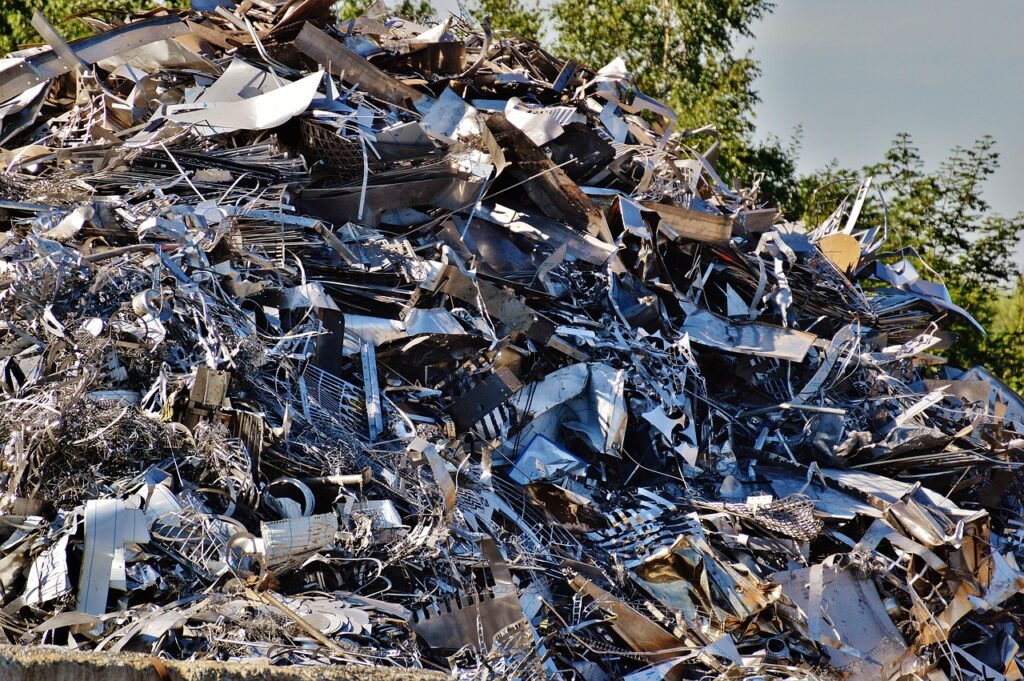
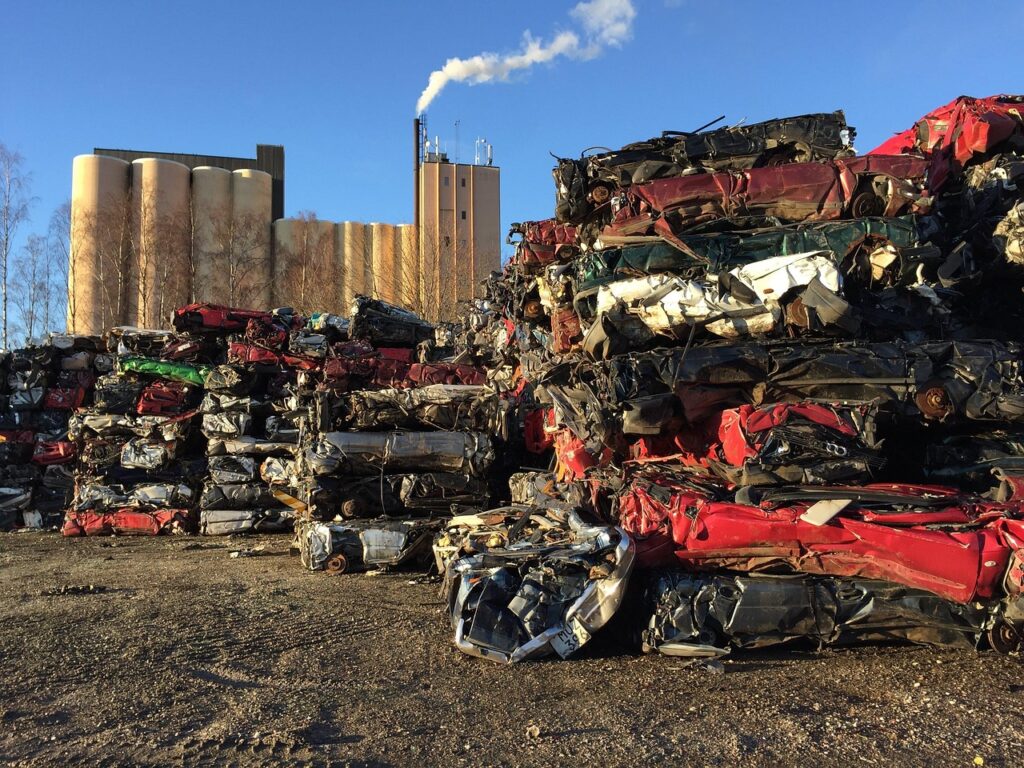
Scrap metal is the most mature, liquid, and transparent waste market in existence. Unlike plastic or paper, metal can be melted down and repurposed infinitely without losing its structural integrity.
The Hierarchy of Value
In the metal world, there are “Ferrous” (containing iron) and “Non-Ferrous” metals.
- Ferrous Metals (Steel/Iron): These are found in appliances and car frames. They are heavy, common, and low-value per pound.
- Non-Ferrous Metals (Copper/Aluminum/Brass): This is where the real money lives.
- Copper: Often called “Red Gold.” Whether it’s “Bright Shiny” (bare wire) or #2 Copper (burnt or coated), this is the most sought-after material in the scrap world.
- Aluminum: High volume, lower price, but incredibly easy to process.
- Brass: Found in plumbing fixtures and ammunition casings.
Who Actually Buys It?
The supply chain ends at Foundries and Mills, but they don’t buy from individuals. They buy from Scrap Processors who use industrial shredders and magnets to sort thousands of tons a day. Small-scale operators sell to Scrap Yards, who act as the “banks” of the metal world, paying cash on the spot based on daily COMEX or London Metal Exchange (LME) prices.
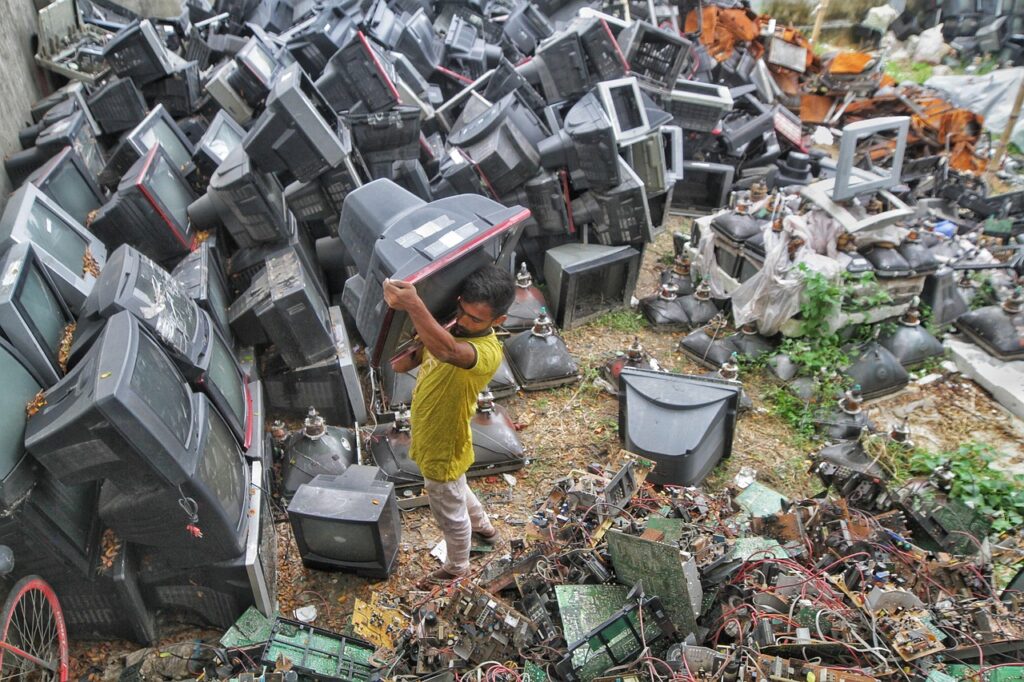
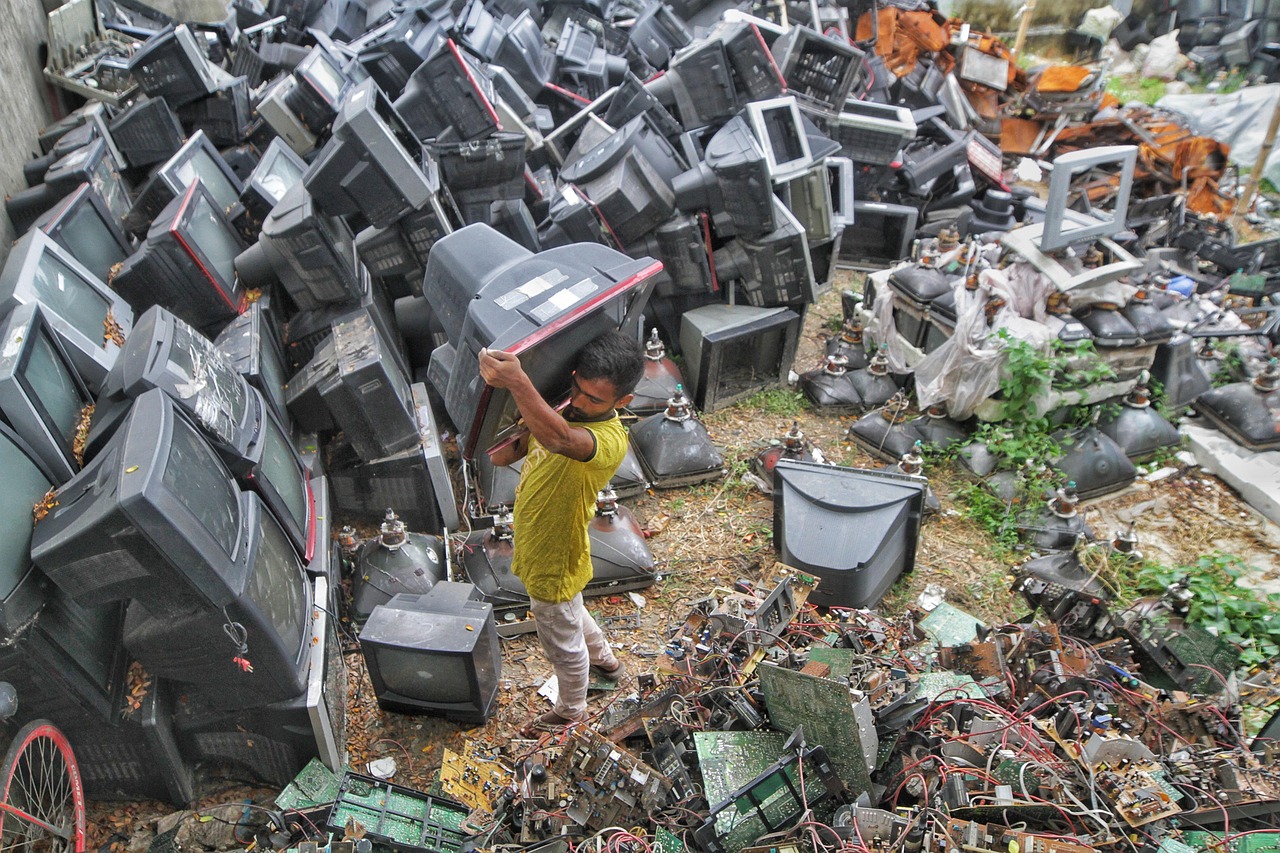
2. Electronic Waste (E-Waste).
An “urban mine” is a term for the massive amount of precious metals sitting in our junk drawers and server rooms. There is more gold in a ton of circuit boards than there is in a ton of gold ore extracted from the earth.
Where the Value Hides
- CPUs (Central Processing Units): These contain the highest concentration of gold and silver pins.
- RAM (Memory): Gold-edged “fingers” are highly prized by refiners.
- Motherboards: Classified by “grade” (High-grade, Mid-grade, Low-grade). High-grade boards from servers or medical equipment are worth significantly more than a board from a modern toy.
The Buyer Ecosystem
The buyers are Specialized E-Waste Recyclers and Refiners. Because E-waste contains toxins like lead, mercury, and cadmium, this industry is heavily regulated by the EPA. You cannot simply melt circuit boards in your backyard without catching a federal felony. Professional buyers use chemical “leaching” or high-heat smelting to recover 99.9% of the precious metals.
3. Used Cooking Oil (UCO).
Two decades ago, restaurants had to pay people to take away their old deep-fryer grease. Today, companies compete and sometimes even steal to get their hands on it.
The Biodiesel Revolution
The primary buyer of UCO is the Biofuel Industry. Through a process called transesterification, old French fry oil is converted into Biodiesel or Renewable Diesel.
- The Incentive: Government credits (like the RFS in the US) make renewable fuels highly profitable.
- The Players: Companies like Darling Ingredients or Baker Commodities deploy fleets of vacuum trucks to “harvest” this yellow grease from “grease traps” and storage bins.
4. Cardboard (OCC) and Paper.
In the industry, cardboard is known as Old Corrugated Containers (OCC). During the 2020-2022 e-commerce boom, OCC prices skyrocketed. When the economy cools, prices dip, but the demand never hits zero.
Why It’s Scalable
Cardboard is the “low-hanging fruit” of waste.
- The Buyers: Paper mills (like International Paper or Georgia-Pacific) use recycled OCC to make new shipping boxes.
- The Catch: Contamination is the enemy. One pizza box with grease or one stray plastic bag can ruin a whole bale of cardboard, causing the buyer to reject the entire load. In this market, cleanliness equals profit.
5. Construction & Demolition (C&D) Debris
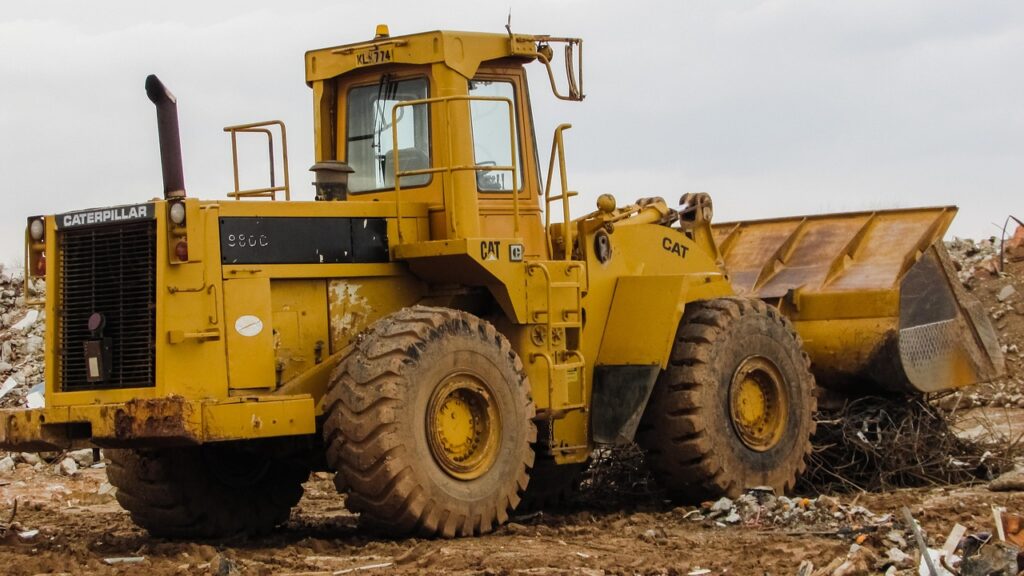
When a building is torn down, it’s not just a pile of rubble; it’s a catalog of materials.
The Salvage Value
- Architectural Salvage: Antique bricks, heart-pine beams, and vintage fixtures are sold to high-end contractors and designers.
- Concrete: Large recyclers grind old concrete into “aggregate” used for road bases.
- Gypsum/Drywall: Can be recycled into new drywall or used as a soil amendment in agriculture.
The Buyer: C&D Recycling Centres and Material Recovery Facilities (MRFs). These entities exist because landfill “tipping fees” (the cost to dump) are expensive. By sorting and reselling the debris, they avoid the cost of dumping and create a new revenue stream.
6. Textiles.
The “fast fashion” era has created a mountain of textile waste. While your local Goodwill might sell a fraction of what is donated, the vast majority moves into the industrial waste stream.
The Three Tiers of Resale
- Premium Resale: High-end brands sold to vintage shops.
- Export Grade: Clothing baled and shipped to developing nations (largely in Africa and Central America).
- Industrial Wiping Rags: T-shirts and towels cut up and sold to mechanics and factories as “shoptows.”
7. Plastics.
This is where most “waste-preneurs” fail. The world is drowning in plastic, yet most of it has zero resale value. The Only Ones That Matter are.
- PET (#1): Clear water and soda bottles.
- HDPE (#2): Milk jugs and detergent bottles (specifically “Natural” HDPE, which isn’t dyed).
- LDPE (#4): Industrial stretch wrap (clear “boat film” used in warehouses).
If the plastic is mixed, colored, or dirty, the cost to clean and sort it exceeds the value of the raw resin. Buyers (Plastic Reclaimers) only want “post-consumer resin” (PCR) that is pure enough to go back into food-grade packaging.
The Brutal Reality.
If there is so much money in waste, why isn’t everyone doing it? Because the “Uncomfortable Truth” is that waste management is a logistics and compliance business, not a “treasure hunting” business.
The Three Killers of Waste Profit.
- Transportation Costs: Waste is often heavy and low-value. If you have to drive 100 miles to sell $200 worth of cardboard, you have lost money on fuel and time.
- Storage/Space: To make money on volume (like paper or plastic), you need massive warehouses and industrial balers.
- Regulations: In many states, you need a “Solid Waste Hauler” permit, “E-waste” certifications, or “Hazmat” licenses. The barrier to entry is not the work; it’s the paperwork.
How to Actually Win in Waste Resale
If you are serious about this industry, stop looking for “stuff” and start looking for contracts. * Don’t be the guy picking up cans on the side of the road.
- Do be the person who signs a contract with a manufacturing plant to manage their “scrap stream.”
- Do solve a business’s “compliance headache.”
The Bottom Line
Waste is only “trash” until it is sorted, cleaned, and transported to someone who needs it. The resale value of waste is entirely dependent on the price of the material it replaces. When oil prices are high, plastic recycling is profitable. When copper is scarce, scrap yards are gold mines.
In a world of “digital assets” and “speculative stocks,” the waste industry offers something rare: A business built on physical reality. As long as humans consume, there will be a discarded byproduct. And as long as there is a byproduct, there is a profit to be made for those willing to get their hands dirty.



[…] read: 7 Types of Waste That Have Resale […]